

Writing about medication still feels exposed. Not because it is controversial in a medical sense, but because it touches something deeply personal: the idea that needing support somehow reflects a personal failure.
I want to start clearly and responsibly. I am not a doctor, not a psychiatrist and not a medical professional. This is not medical advice. What follows is simply my lived experience, shaped together with healthcare professionals.
My path to medication was not linear. Before finding something that helped, I tried Ritalin, different forms of Methylphenidate and other options. Each attempt came with hope, curiosity and eventually disappointment. Some medications helped with focus but flattened my emotions. Others made my body feel alert while my mind felt strangely disconnected. None of them were inherently wrong. They were just not right for me.
I am currently taking Elvanse, 50 mg. Writing that down still feels oddly intimate, because numbers invite judgement. I want to be clear: this is not a recommendation, just a factual part of my story. Elvanse did not remove my ADHD. I still struggle with distraction, overwhelm and fatigue. What changed was something subtler. Friction decreased. Starting tasks stopped feeling like pushing against an invisible wall. My thoughts did not become slow or silent, but they became usable.
Alongside Elvanse, I also take Wellbutrin. Not to optimise productivity, not to chase happiness, but to support my overall wellbeing. For me, it helps stabilise my emotional baseline. It smooths out some of the sharp edges that made everyday life feel heavier than it needed to be. This combination works for me, at least right now. That does not make it universal, and it does not make it permanent.
One of the most important realisations for me was this: medication does not create motivation. It creates access. Access to focus, to follow-through, to choice. I still need structure, rest, boundaries and compassion. Medication did not replace those needs. It made meeting them possible.
There is grief in this process. Grief for how hard things were before. Grief for the years spent believing that my struggles were moral failures rather than neurological realities. But there is also relief. Relief in understanding that needing help does not mean something is wrong with me.
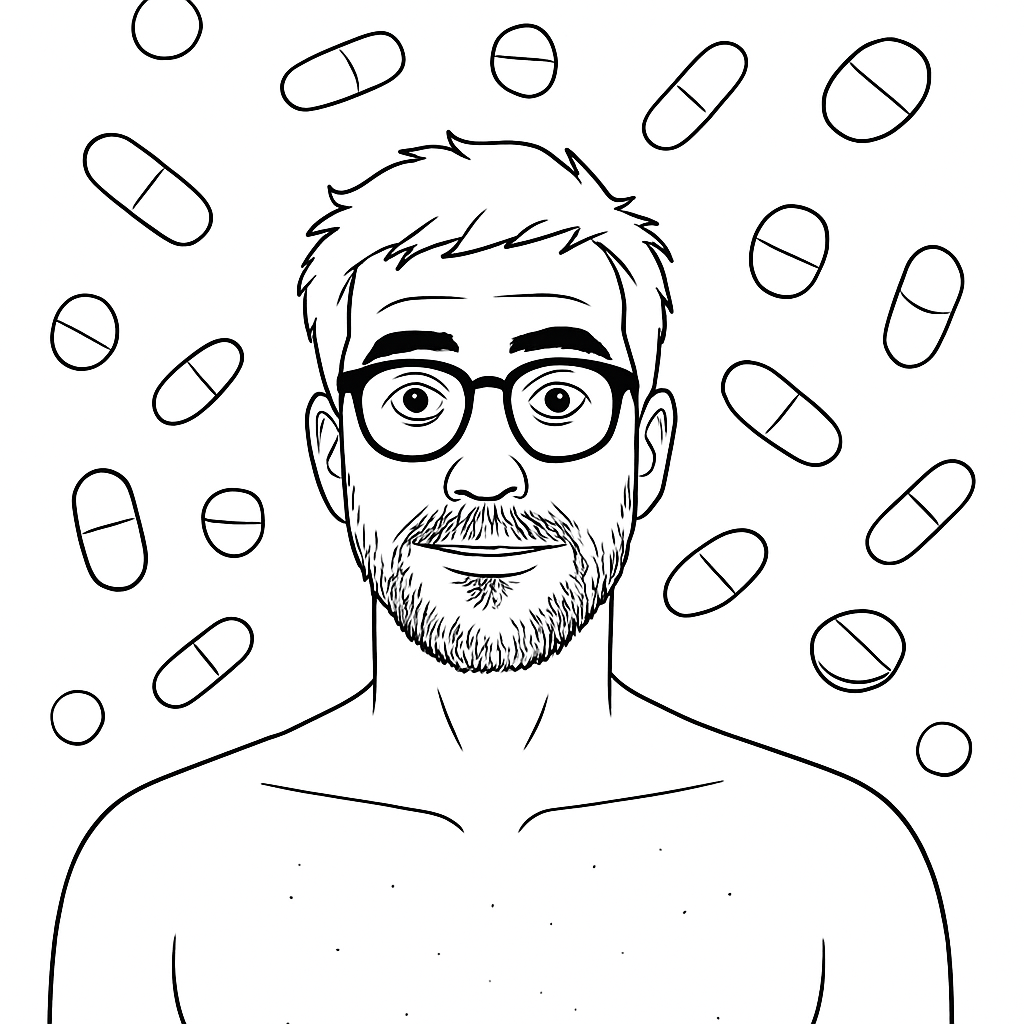
And yet, medication is rarely allowed to be neutral. ADHD medication is often framed as cheating. Antidepressants are framed as weakness. Both carry a strange moral weight, as if using medical support somehow diminishes authenticity. This stigma often hides behind concern. “Are you sure you need that?” “Have you tried just pushing through?” “But you seem fine.” These questions sound caring, but they quietly imply that medication is excessive or suspicious.
What bothers me most is how often medication is judged based on output. ADHD medication is tolerated if it makes someone more productive. Antidepressants are accepted if they make someone easier to deal with. Rarely are these tools discussed in terms of sustainability, dignity or quality of life.
We do not apply this logic to glasses, hearing aids or insulin. We do not ask people to prove they are struggling enough to deserve support when the need is visible. When it comes to the brain, however, support is treated like a confession.
Medication is not a personality replacement. It does not erase complexity or pain. It does not fix everything. It simply removes some barriers. For some people, that removal is life-changing. For others, it is not worth the side effects. Both outcomes are valid.
For me, Elvanse and Wellbutrin are part of a larger system: therapy, self-designed tools, pacing, creative work and learning to respect my limits. Medication did not give me a new self. It gave me a bit more space inside the one I already had.
And sometimes, that space is not about becoming better. It is about finally being able to breathe.