
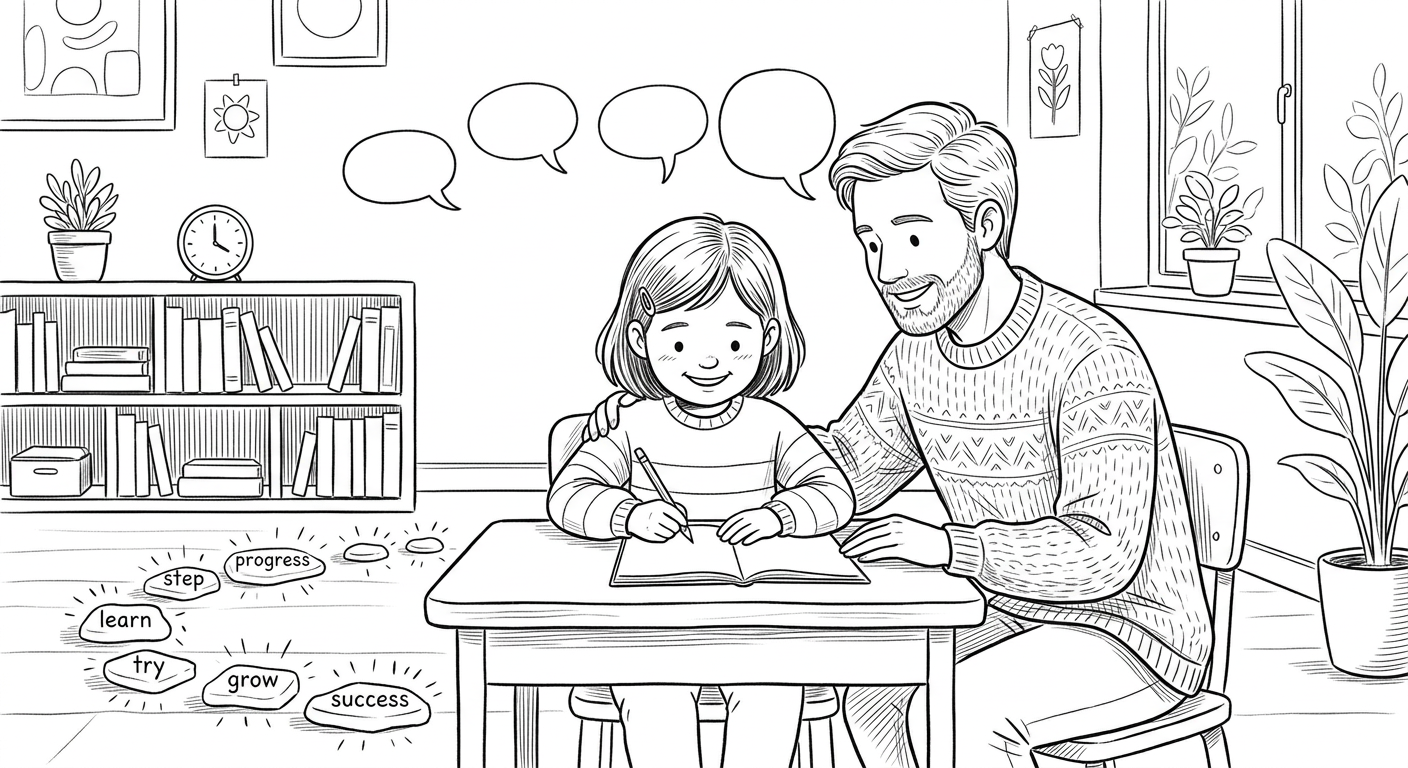
In social pedagogy, we often talk about big goals. Development. Independence. Progress. These concepts are important, but in the everyday reality of my work, change usually looks different.
It starts small.
I work with children in a boarding setting at a speech and language school. Many of these children have already experienced that things do not work for them in the same way they seem to work for others. Language can be difficult. Words do not always come easily. Sentences get stuck. Thoughts are there, but expressing them is not always simple.
And that affects much more than just speech.
When communication is difficult, misunderstandings happen more quickly. Frustration builds faster. Conflicts escalate more easily. A child might want to explain why they are angry or what felt unfair in a situation, but they cannot find the words to say it.
In those moments, a feeling of helplessness can emerge.
And from helplessness, reactions often follow that are difficult to understand from the outside.
Some children withdraw. Others become loud or impulsive. Some try to avoid situations where they might have to speak. Behind many of these reactions lies the same core experience: communication can feel like a struggle.
If a child repeatedly experiences that things do not work, something else slowly develops — the belief that it might be better not to try at all.
This is where small successes become important.
A small success can be something very simple. A child manages to finish a sentence even though they hesitate in the middle. Another child tries to say a word again after it did not work the first time. Two children get into a conflict, but instead of immediately shouting, there is a moment where conversation becomes possible.
From the outside, these moments can seem insignificant. They pass quickly in the flow of everyday life. But for the children themselves, they can mean a great deal.
Because in these moments something important happens: a child experiences that something works.
Not perfectly.
Not effortlessly.
But well enough.
These experiences matter because they slowly begin to change how a child sees themselves. When something works, even in a small way, a new thought becomes possible: maybe I can do this after all.
This kind of change rarely happens suddenly. It develops quietly, step by step. A little more courage to say something. A little more trust in one’s own abilities. A little more patience with oneself.
In social pedagogical work, this often means consciously paying attention to these small moments of progress. Not only focusing on what is still difficult, but also noticing what is already working.
It also means shaping expectations in a way that allows success to happen. Not by lowering standards, but by creating situations that are achievable. Situations in which children can experience that their effort leads somewhere.
Sometimes these small moments are the ones that make the biggest difference in the long run.
One more sentence than yesterday.
One more attempt than last week.
A conflict that ends a little calmer than the last one.
From experiences like these, something bigger slowly grows: trust in one’s ability to face challenges.
Perhaps that is one of the most important tasks in social pedagogical work — creating spaces where small successes can happen at all.
Because real change rarely begins with big breakthroughs.
It begins with small steps that suddenly show: it is possible after all.